Dr. Ned Walker
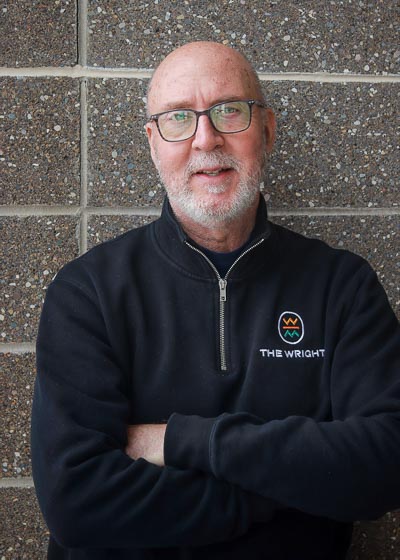
Dr. Ned Walker is a Univeristy Distinguished Professor in the departments of Microbiology, Genetics, & Immunology and Entomology at MSU. Here are his answers to the Micro Biography questions:
How and when did you become interested in the field(s) of microbiology, genetics, and/or immunology, and were there any particular people or events who were influential in your journey?
As an undergraduate at Ohio University in Athens, Ohio, in the 1970s, I was interested in taking an entomology course but needed permission to skip a prerequisite. I met with Dr. William Romoser, who not only waived the requirement but also offered me a job in his lab. There, I raised cockroaches and other insects, including mosquitoes, and learned foundational lab techniques such as preparing tissue samples, using a microtome to cut thin sections, and analyzing slides.
This was my introduction to scientific research, and I quickly became deeply involved in his lab as an undergraduate. Dr. Romoser mentored me through a master’s degree and encouraged me to pursue a PhD elsewhere. His generosity and guidance were pivotal in shaping my career.
During my doctoral work with John Edman at the University of Massachusetts Amherst, I began studying mosquito-borne encephalitis viruses. This marked my first professional step into microbiology.
How did you become a part of this department?
I joined Michigan State University in 1990 as a faculty member in Entomology and became part of MGI in 2002, when the department was still known as Microbiology and Public Health (later still it became Microbiology and Molecular Genetics). I was drawn to MGI because of its strength in microbial ecology and the opportunity to collaborate with colleagues such as Tom Schmidt, Terry Marsh, Mike Klug, Frank Dazzo, Jim Tiedje, and Michael Bagdasarian.
Another major draw was the opportunity to teach. Over more than 20 years, I contributed to the microbial ecology course, often working with Jay Lennon and Ashley Shade. I also enjoyed teaching prokaryotic physiology with Claire Vielle, as well as courses in virology and parasitology within the veterinary curriculum alongside Roger Maes and Linda Mansfield. Working with undergraduate and veterinary students was one of the most rewarding parts of my time in the department.
What is your main role / research area and why is it important?
When I first joined the faculty, our group focused on how microbial activity influences mosquito development in aquatic habitats. Using water-filled tree holes and the mosquito species Aedes triseriatus as a model, we initially relied on direct observation before transitioning to molecular approaches, many of which were developed by colleagues in MGI.
We found that pulses of nutrients, especially nitrogen and easily available carbon, boost microbial activity in decomposing leaf litter. This, in turn, accelerated mosquito development and increased body size at pupation. Fungi played a particularly important role in supporting mosquito growth, with bacteria contributing as well. At the same time, feeding by mosquito larvae reshaped the microbial community, reducing its overall abundance and favoring less digestible forms.
Our group also explored new control strategies. In collaboration with Michael Bagdasarian, we engineered bacteria to produce compounds that kill mosquito larvae. We studied how bacteria colonize the mosquito gut, identifying Elizabethkingia as both an important symbiont and an opportunistic pathogen.
This work later expanded to malaria mosquitoes, Anopheles gambiae, in Kenya, where the ecological system differs from tree holes. Much of this research was supported by the National Institute of Allergy and Infectious Diseases over more than two decades and would not have been possible without strong collaborations.
During this time, I also served as co-director of the Center for Emerging Infectious Diseases, following encouragement from then-MGI chair Jerry Dodgson. The center brought together researchers to study emerging threats, including zoonotic diseases, foodborne pathogens such as pathogenic E. coli, Lyme disease, and West Nile virus.
Working with co-director Steve Bolin and colleagues across campus, including Tom Whittam, Linda Mansfield, Vincent Young, and Shannon Manning, helped expand our research reach. Support from the MSU Foundation played a key role, leading to a ninefold increase in external funding over five years.
Building on earlier work in Kenya, our research expanded to understand how malaria spreads in human populations. We examined how environmental features influence risk and tested strategies to reduce transmission, including insecticide-treated bed nets, bacterial larvicides, and medications that make human hosts less hospitable to mosquitoes.
These efforts extended to Malawi and Papua New Guinea, supported by NIAID and the Fogarty International Center. Along the way, we developed strong collaborations with local researchers, U.S. universities, and the CDC. Training grants supported graduate students and postdoctoral researchers, while my role in MGI provided the flexibility needed for extensive international work.
Collaborations with Pat Venta and David Foran introduced a novel approach to studying mosquito feeding behavior. Using forensic genotyping, we identified individuals who were more likely to be bitten by Anopheles mosquitoes in Malawi and Papua New Guinea. I am grateful to former chairs Jerry Dodgson and Walt Esselman for their support of the travel this work required.
At the same time, the emergence of West Nile virus and growing concern about Lyme disease opened new directions for research closer to home. We studied mosquito-borne viruses such as West Nile, Jamestown Canyon, and Eastern equine encephalitis, as well as tick-borne diseases, with support from the NSF and CDC.
One key finding was that the American robin plays a major role in amplifying West Nile virus. Hot, dry summers were linked to spikes in transmission, particularly in urban areas like Chicago and Detroit, where mosquito production, bird populations, and human density intersect. This work formed the basis of PhD research by Gabe Hamer.
We also identified urban “hot spots” of transmission in post–World War II suburban areas. Further studies showed that Culex pipiens mosquitoes responsible for spreading West Nile virus represent a mix of bird- and mammal-feeding types, leading to research on how mosquitoes choose their hosts, led by graduate student Megan Fritz.
Later work focused on Eastern equine encephalitis virus in Michigan, where we developed and tested a control system targeting its primary mosquito vector, Culiseta melanura. At the same time, research on tick-borne diseases continued in collaboration with Jean Tsao, examining how landscape features and host interactions influence disease risk.
How do you see your role / research evolving?
As I enter my final year at Michigan State University and prepare for retirement after 40 years, I look back with deep appreciation for the colleagues, students, and staff who made this work possible. It has been incredibly rewarding to be part of MGI’s growth, and I am confident the department will continue to thrive under the leadership of Vic DiRita and the next generation of faculty.
Looking ahead, I plan to remain engaged in research, including ongoing work in Rwanda focused on irrigation and malaria risk, as well as efforts to manage mosquito populations that transmit Eastern equine encephalitis using targeted control strategies.