Bobby Zuniga
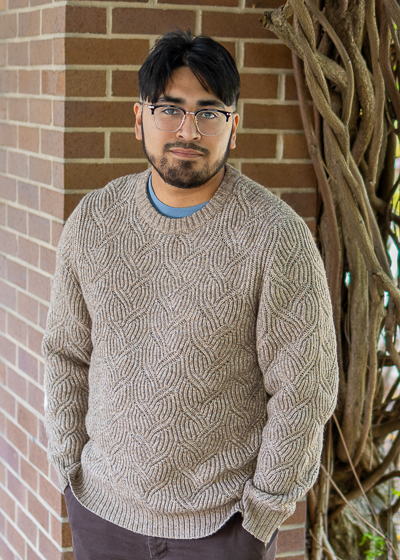
Bobby Zuniga is an MGI graduate student in the Mi Lab at Henry Ford Health. These
are his answers to the Micro Biography questions:
How and when did you become interested in the field(s) of microbiology, genetics, and/or immunology?
My interest in genetics and immunology first started at Oakland University, where I completed my undergraduate studies. Originally, I had intended to pursue the medical field, but my interests shifted during my second year after taking a genetics lab course. Encouraged by my teaching assistant, I reached out to faculty to gain in-lab experience. I joined Dr. Douglas Wendell’s lab as a summer technician, where I gained my first hands-on research experience and learned core genetics techniques. This experience played an important role in shaping my interest in genetics research.
Around the same time, a physiology course sparked my interest in the immune system. I admired how complex and important the immune system is. After graduating, I joined Dr. Qing-Sheng Mi’s lab at Henry Ford Health, where I worked with mouse models to study immune cell development. This exposure to in vivo genetic approaches further solidified my interest in studying immune regulation through a genetic and mechanistic lens.
Were there any particular people or events who were influential in your journey?
Several mentors and experiences have strongly shaped my development as a researcher. During my time in Dr. Qing-Sheng Mi’s laboratory, I worked closely with two research scientists who had a major influence on my training. Dr. Yi Yao provided extensive hands-on mentorship on experimental techniques, including mouse tissue processing, cell culture, flow cytometry, and CyTOF, helping me build a strong technical foundation for my research today.
I also worked closely with Dr. Jie Wang, whose mentorship sparked my interest in T cell immunology. Through collaborative projects, she offered me her guidance on experimental design and data interpretation. Her mentorship played a valuable role in solidifying my interest in T cell immunology.
Dr. Mi has played a vital role in my academic growth. After undergraduate training, he offered me the opportunity to join his lab. During this time, he entrusted me with an independent research project, which strengthened my confidence and commitment to a research career. I am grateful that he continues to challenge me to think critically and approach scientific questions thoughtfully.
A key experience that influenced my decision to pursue industry research was a temporary position at a biotechnology startup in San Francisco. Working in an industry setting exposed me to fast-paced, goal-driven, and translational research, which I found highly motivating. After graduating, I hope find a career in industry research.
How did you come to be a part of this department?
When I joined the BioMolecular Sciences PhD program at Michigan State University, I carefully evaluated the available departmental training programs. Given my research interests in T cell immunology, the Department of Microbiology, Genetics, & Immunology stood out as the best fit. The department’s strong focus on immune regulation, genetics, and mechanistic biology closely aligned with my background and long-term research goals, leading me to join. I am happy to have found a home here at MGI!
What is your main role / research area right now and why is it important?
My current research focuses on understanding how epigenetic regulators control T cell development, differentiation, and function. Specifically, I study how chromatin-modifying factors shape gene expression programs that govern T cell identity and immune responses. By examining epigenetic regulation in T cells, my work aims to define the molecular mechanisms that enable immune cells to maintain lineage stability while remaining responsive to environmental and developmental signals.
This research area is important because epigenetic regulation plays a central role in immune homeostasis. Its dysregulation contributes to a wide range of immune-related diseases including autoimmunity, cancer, and chronic inflammation. Importantly, epigenetic regulators represent a class of molecular targets that are increasingly being explored for therapeutic intervention. A deeper mechanistic understanding of how these regulators function in T cells can inform strategies to modulate immune responses in a controlled manner.
How do you see your role / research evolving?
As my research moves forward, I see my work shifting toward more translational applications that use epigenetic insights to improve immunotherapy. Recent advances in T cell-based therapies, including the growing use of CAR-T cells clinically, have highlighted how important T cell differentiation state and long-term function are for treatment success. Epigenetic regulation plays a major role in shaping these properties, but it is still not fully understood in engineered T cell therapies.
Looking ahead, I want to use what I learn about epigenetic regulation to help improve T cell-based immunotherapies. In particular, I am interested in ways epigenetic mechanisms could be leveraged to support long-term T cell function, improve persistence, and reduce exhaustion. By connecting basic epigenetic research with translational immunology, I hope to contribute to the development of more effective immunotherapies.
What types of activities are you involved in outside of work / research?
Outside of research, I enjoy staying active. I have recently gotten back into running and completed my first 5K in quite some time last year, with plans to run a 10K this year. Something that I have been wanting to get back into is rock climbing, so fingers crossed to starting that this year. Moving to Detroit has also quite been fun, I enjoy finding new restaurants, bars, and events in the city.
Is there anything else you’d like to share?
If you’re reading this, I’d love to hear what your favorite protein is and what drew you to it. One of my favorite aspects of science is learning about what inspires others. For me, my favorite protein is Cas9. I am fascinated by its role in CRISPR-Cas9 gene editing and by the story of how a protein originally discovered as part of the bacterial immune system was repurposed into a transformative tool for genome engineering. This example reminds me to think creatively about the science I am doing, as fundamental discoveries can often lead to unexpected and powerful applications. It is also motivating to know that this work was ultimately recognized with a Nobel Prize, highlighting the impact that basic science can have on the broader scientific community.
What is next for you?
At this stage of my training, I am focused on further developing my research project and preparing for my preliminary exam. I look forward to this milestone, as it will allow me to refine my scientific project and lay the foundation for the next phase of my doctoral research.
What do you see as your current career trajectory?
My current career goal is oriented toward a research-focused role in industry, where I can apply my training in immunology and epigenetic regulation to translational research. I am particularly interested in positions that bridge basic mechanistic discovery with therapeutic development.
At the same time, I remain open to exploring the diverse career paths enabled by my PhD training, as I continue to learn about new career paths within the PhD. As my training progresses, I aim to further refine my career direction by gaining exposure to different industry settings while building a strong foundation.