MSU recognized as an ASM Milestones in Microbiology Site
ASM recognized more than a century of contributions to microbial ecology and evolution during an Oct. 22 celebration at Michigan State University.
For more than 125 years, microbiologists at Michigan State University have helped shape scientists’ understanding of the microbial world, from some of the earliest efforts to teach bacteriology to groundbreaking research in microbial ecology and evolution.
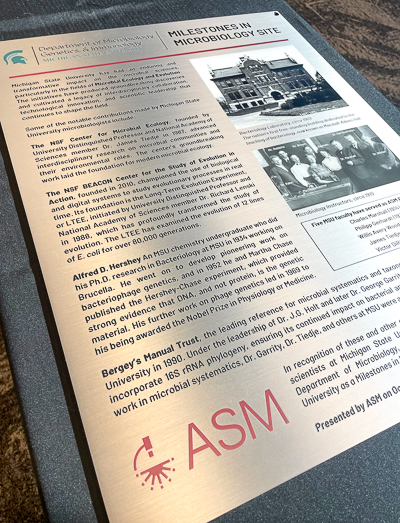
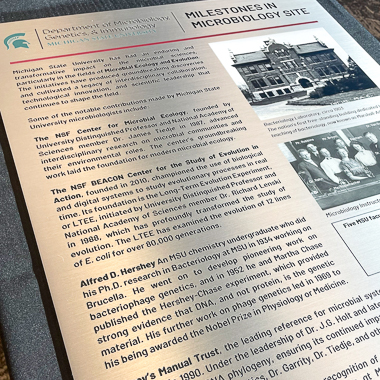
On October 22nd, ASM, formerly known as the American Society for Microbiology, recognized that history by designating MSU’s Department of Microbiology, Genetics, & Immunology, or MGI, as an ASM Milestones in Microbiology site, an honor reserved for institutions and locations that have played significant roles in the development of the microbial sciences.
The recognition reflects not one discovery or scientist, but generations of research and teaching at MSU. The department’s contributions include pioneering work in microbial ecology through the Center for Microbial Ecology, studies of evolution unfolding over tens of thousands of generations in the Long-Term Evolution Experiment, advances in microbial classification, and the training of scientists who have gone on to shape microbiology around the world.
MGI celebrated the designation with an afternoon of events that brought together the department’s history and the science that continues to grow from it. The celebration included the annual Whittam Lecture, a live recording of the podcast This Week in Microbiology, and the presentation of the Milestones plaque by representatives of ASM.
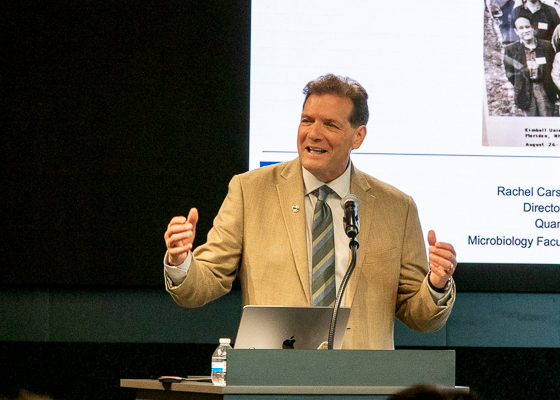
“Being identified as a Milestone site by ASM recognizes the breadth and longevity of microbiology at Michigan State,” said Rudolph Hugh Endowed Chair and MGI Department Chair Victor DiRita. “There isn’t one discovery or one person behind it. It represents the work of generations of scientists who have built programs, made discoveries, trained students, and helped shape the microbial sciences. We’re very proud to see that collective history recognized by ASM.”
From bacteriology to microbial ecology
Microbiology has deep roots at MSU. By the beginning of the 20th century, the university was already conducting research in areas such as food microbiology and farm hygiene, reflecting its origins as a land-grant institution. In 1902, MSU constructed a building devoted to bacteriology, now known as Marshall-Adams Hall. It was the first building in the country constructed specifically for teaching bacteriology, and its cornerstone still bears the subject’s name.
Over the following decades, MSU became particularly influential in the emerging field of microbial ecology: the study of microorganisms in their environments and their interactions with one another and with plants, animals, and humans.
That work took a major step forward with the Center for Microbial Ecology, founded by University Distinguished Professor and National Academy of Sciences member James Tiedje in 1987. Two years later, the center was selected as part of the first group of Science and Technology Centers established by the National Science Foundation.
The center brought researchers from different scientific disciplines together to investigate microbial communities and helped develop genomic and metagenomic approaches for studying microorganisms in complex environments. Its influence also helped bring other major resources in microbial systematics to MSU.
Among them was the Ribosomal Database Project, begun by University of Illinois biologist Carl Woese and moved to MSU in 1993 to expand its development and impact in conjunction with the Center for Microbial Ecology. Bergey’s Manual Trust, responsible for the authoritative reference for bacterial taxonomy, had also moved to MSU in 1990 under George Garrity. At MSU, work on Bergey’s incorporated 16S rRNA phylogeny into microbial classification, helping modernize how scientists understand relationships among bacteria and archaea.
Watching evolution happen
MSU also became a center for studying evolution as an observable process.
In 1988, University Distinguished Professor and National Academy of Sciences member Richard Lenski began what would become one of the longest-running evolution experiments in history. The Long-Term Evolution Experiment, or LTEE, follows 12 populations of Escherichia coli as they evolve under controlled laboratory conditions.
More than 80,000 generations later, the experiment has produced insights into mutation, adaptation, and evolutionary dynamics, while the bacterial populations and data generated by the project have supported research by scientists around the world.
That work helped provide the foundation for another major MSU research initiative. Established in 2010, the NSF-funded BEACON Center for the Study of Evolution in Action brought together biologists, computer scientists, and engineers to study evolutionary processes using both biological and digital systems. Its consortium eventually supported hundreds of projects involving more than 1,000 researchers and trainees across MSU and partner universities.
A legacy carried forward
The Milestones designation also recognizes the people MSU has trained and their influence on microbiology beyond the university.
Among them is Alfred D. Hershey, who earned his bachelor’s degree in chemistry from MSU in 1930 and his doctorate in bacteriology in 1934. Hershey later conducted the landmark Hershey-Chase experiment with Martha Chase, providing strong evidence that DNA, rather than protein, is genetic material. He received the Nobel Prize in Physiology or Medicine in 1969 for his work on the genetics of bacteriophages.
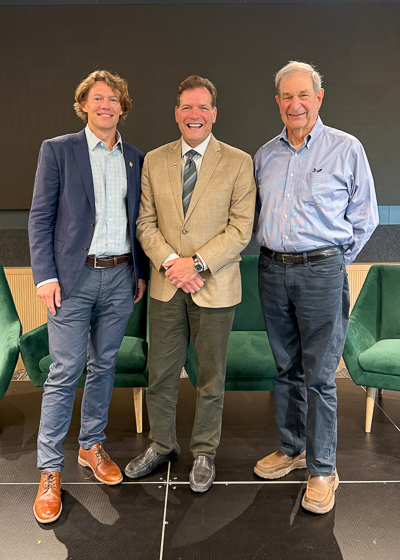
MSU microbiologists have also had a longstanding connection with ASM itself. Five MSU microbiology faculty members have served as president of the organization: Charles Edward Marshall, Phillip Gerhardt, Willis Avery Wood, James Tiedje, and current MGI Chair Victor DiRita.
MGI alumnus Vaughn Cooper is the current ASM president.
Cooper’s own scientific career is part of the legacy the Milestones designation celebrates. He trained in the Lenski Lab doing research connected with the LTEE and is now a professor of microbiology and molecular genetics at the University of Pittsburgh.
Cooper presented the award to MSU, saying, “Today, Michigan State University becomes the 22nd Milestones in Microbiology site, joining institutions whose discoveries and scientific communities have helped shape the direction of our field. MSU’s milestone is both historical and ongoing. From bacteriology and phage genetics to microbial communities and evolution, the university has repeatedly expanded the questions microbiologists can ask and the tools we can use to answer them.”
Celebrating the past and the science still to come
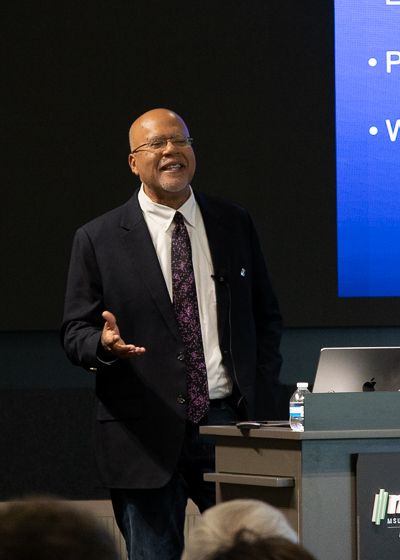
The celebration connected the department’s history with continuing work in microbial evolution.
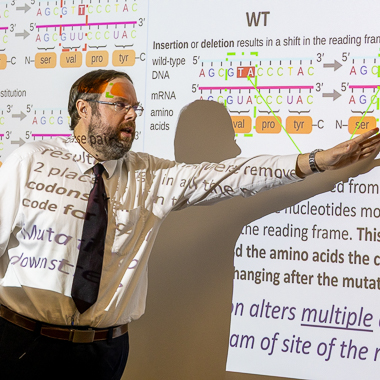
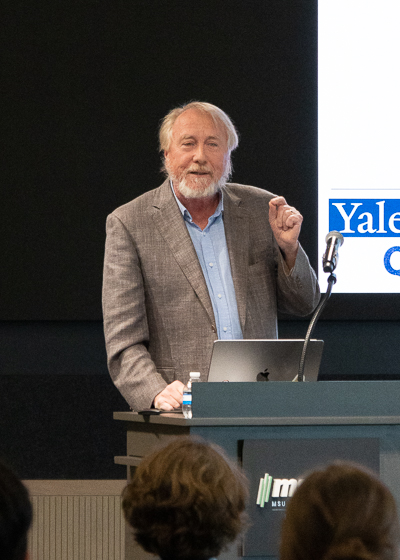
Paul Turner, the Rachel Carson Professor of Ecology and Evolutionary Biology at Yale University, delivered the annual Whittam Lecture, named for the late MSU evolutionary biologist Thomas Whittam. Whittam led MSU’s Microbiology Research Unit, which focused on pathogen evolution and helped expand the university’s research and training in microbial pathogenesis.
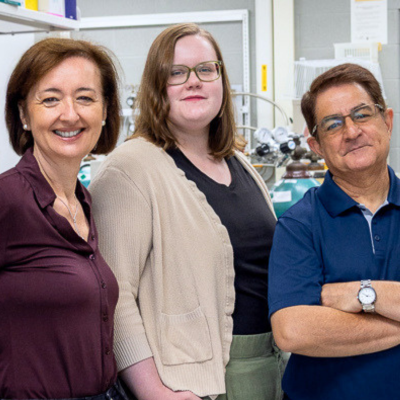
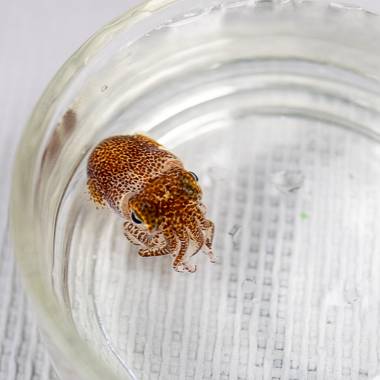
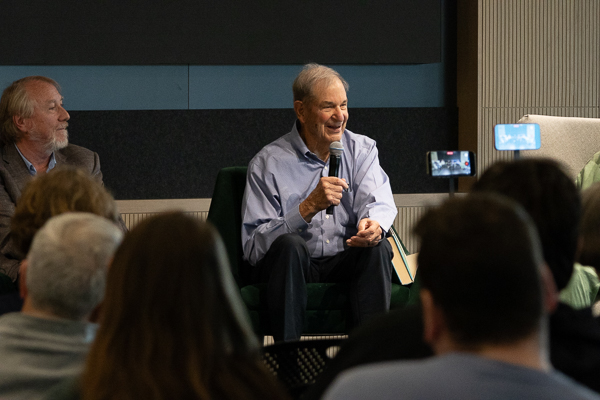
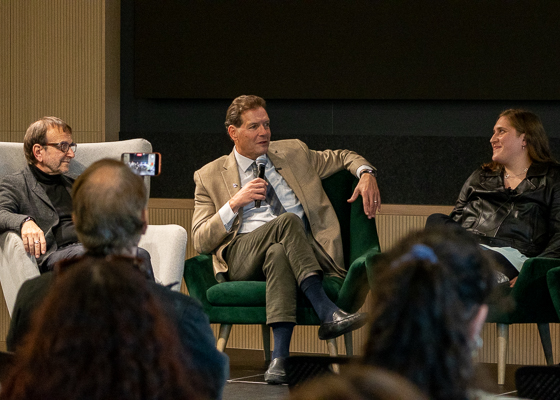
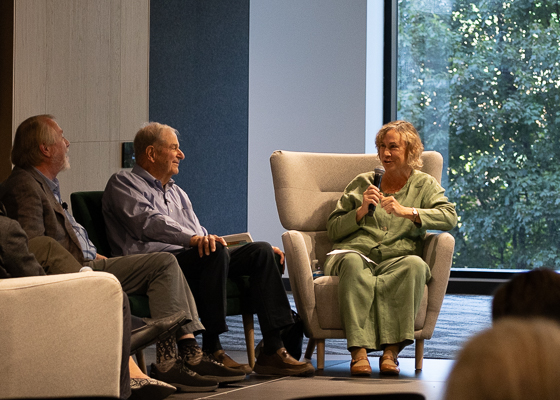
The afternoon also featured a live recording of This Week in Microbiology, hosted by Michele Swanson and Vincent Racaniello. The hosts spoke with DiRita, Assistant Professor Elizabeth Heath-Heckman, Lenski, and Tiedje. Heath-Heckman discussed her work on the symbiotic relationship between Hawaiian bobtail squid and the bacterium Vibrio fischeri, highlighting one of the ways MSU scientists continue to explore interactions between microorganisms and their hosts. Lenski and Tiedje shared historical perspectives on their scientific contributions, which are specifically recognized by the ASM Milestones designation. The celebration concluded with a reception.
The Milestones plaque will be displayed in the atrium of MSU’s Biomedical and Physical Sciences Building, home to MGI and much of the research carrying that history forward.
“A key aspect of this recognition is that it doesn’t recognize only what we did in the past” said DiRita. “The work highlighted by this Milestones designation has created scientific communities, research programs, and training efforts that are still very much alive at MSU. We strive to build on that foundation, to keep asking important questions, and to give our trainees tools to be leaders in the field of microbiology, confronting future challenges that we can’t even anticipate.”