Dissertation Fellowships awarded to two MGI graduate students
Two graduate students in Michigan State University’s Department of Microbiology, Genetics, & Immunology have been awarded dissertation-related fellowships from the College of Natural Science and the Graduate School, supporting their efforts to finalize their doctoral research and complete their dissertations.
These fellowships provide critical support to advanced doctoral students, allowing them to focus on writing, completing research projects, and preparing their work for publication.
Kevin Santiago‑Morales

Kevin Santiago‑Morales, a doctoral candidate in MGI Associate Professor Sarah Lebeis’ lab, received a Dissertation Completion Fellowship. He studies how interactions between plants and soil microbes influence plant responses to environmental stress.
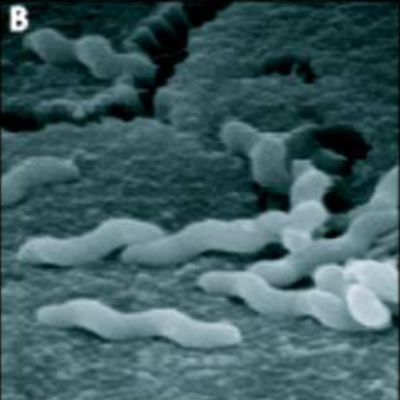
When plants experience stress from low nutrient availability, their root development is altered as a result of changes in a key plant hormone called auxin. Soil bacteria can also process auxin, potentially influencing how plant roots grow, though the extent of this contribution is not fully understood.
Santiago‑Morales’ work examines how plant and microbial auxin metabolism work together to shape plant responses to nutrient stress. This research could help inform improved agricultural practices, including the development of microbial-based crop inputs that promote plant health while reducing reliance on traditional fertilizers.
“It’s always so beautiful to be a part of a student’s academic journey,” said Lebeis. “Kevin’s has been even more special because he started during COVID and watching him go from being the only person in the lab to a joyful team member in the lab has been incredible.It's also been really exciting because Kevin's dissertation research started by looking at plant-microbe interactions in a model plant, but by the end he'll be looking at multiple crops and commercially available product, so his work will impact decisions made by growers in Michigan.”
Santiago-Morales is grateful for the support that the fellowship offers.
“The fellowship will provide me with the time and space to finish my projects, bring everything together into a dissertation I'm proud of, and make sure my findings reach the people who can use them,” said Santiago‑Morales.
Jessica Lysne
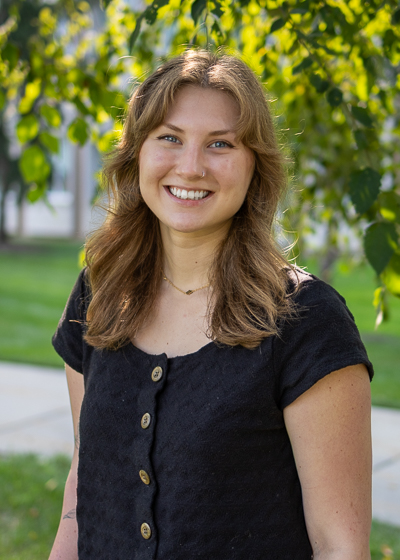
Jessica Lysne, a doctoral candidate in the laboratory of Neal Hammer, received a Dissertation Continuation Fellowship in recognition of her progress toward completing her Ph.D.
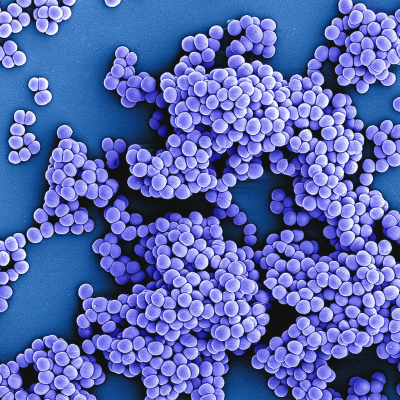
Lysne’s work focuses on Staphylococcus aureus, a common bacterium that often lives harmlessly on the body but can also cause serious infections, especially in antibiotic-resistant forms like MRSA. Its ability to survive in many different parts of the body comes from how well it can adjust its energy use to different conditions. This work examines how specific parts of its energy system—and strains that don’t rely on normal respiration—help it infect different tissues and persist in patients, with the goal of informing future treatments.
“Jessica is highly deserving of a Dissertation Continuation Fellowship,” said Hammer. “She is a curious, creative, and positive developing scientist who has already made significant contributions to our work, including middle authorship on a 2025 publication. Support from the DCF will sustain her momentum, and her passion for research will serve her well as she continues investigating S. aureus metabolism.”
Lysne is extremely grateful for the fellowship and the support it gives, which will allow her to focus her full attention on her thesis research over the coming months.
“I hope to use this support to make meaningful progress untangling the complexities of S. aureus metabolism and contribute productively to my scientific community– both in the staphylococcal field and here at MSU,” said Lysne.