NASA fellowship sends MGI graduate student to France for astrobiology research
MGI doctoral candidate Sarah Gonzalez Henao has been selected for the NASA Early Career Collaboration Award, a competitive fellowship that supports early career scientists working in astrobiology.
The award will fund a two-month research internship this March at the Mediterranean Institute of Oceanography, or MIO, in France. While there, Gonzalez Henao will study how life manages to survive in some of the planet’s most extreme environments — work that can offer clues for the search for life beyond Earth.

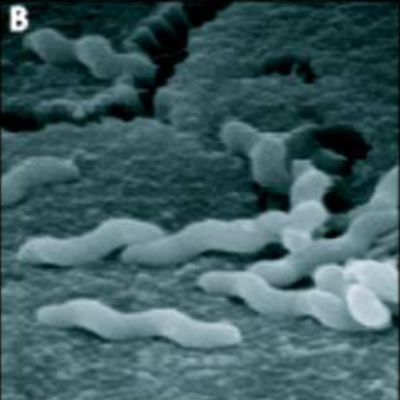
Gonzalez Henao, a doctoral candidate in MSU’s Department of Microbiology, Genetics, & Immunology, will work with an extremophile culture collection taken from the Prony hydrothermal system in New Caledonia. This site is a hyperalkaline environment where the pH can exceed 11. Its unusual chemistry makes it an important natural model for studying early Earth and planetary habitability.
Her project will examine the microbes’ ability to form biofilms — structured communities that can shield cells from harsh conditions — and what those capabilities might mean for astrobiology. The internship builds on a long running collaboration between her advisor, MSU geomicrobiologist Matt Schrenk, and MIO researcher Gaël Erauso.
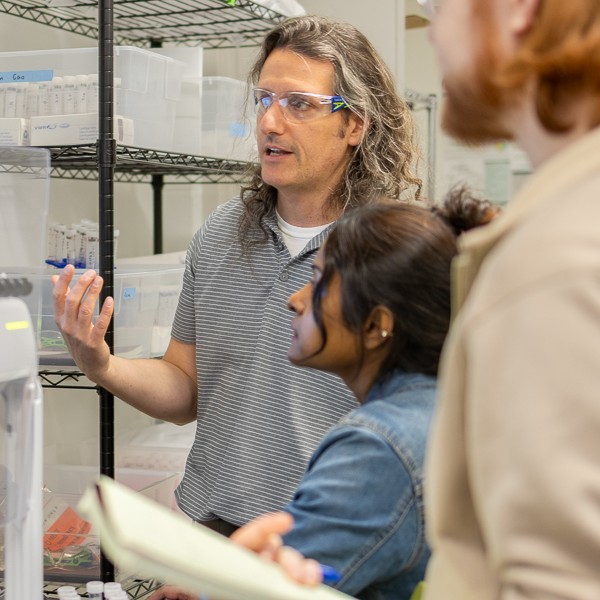
"Sarah is an exceptional interdisciplinary scientist, spanning with depth geochemistry and microbiology,” said Schrenk. “The NASA Early Career Award is a recognition of her great efforts and will allow Sarah to expand her professional network while learning from international experts in the cultivation of microbial extremophiles. This award will allow Sarah to fully explore future career opportunities while carrying out an innovative project to better understand extremophile physiology.”
This fellowship adds to Gonzalez Henao’s growing portfolio of research on microbial biofilms in extreme settings. In earlier work, she studied biofilms in hyperalkaline springs in Costa Rica to better understand how these resilient communities survive and what kinds of biosignatures they leave behind. Studies like these help guide researchers who are looking for evidence of life on other planets, especially Mars, where some minerals form under similar conditions.
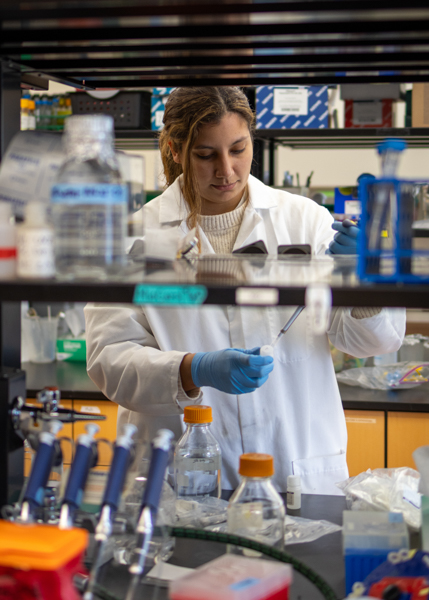
Gonzalez Henao said getting to work directly with extremophile cultures from the Prony system will give her a deeper understanding of how microbial communities adapt to chemically challenging environments.
“The NASA Early Career Collaboration Award is a major milestone for me,” said Gonzalez Henao. “I’m thrilled not only for the chance to develop new research skills, but also to spend time in France — learning from experts in extremophile microbiology while experiencing a new culture. I’m excited to bring what I learn back to Michigan State, strengthen my expertise in microbial biofilms, and continue shaping my future in astrobiology and extreme microbiology.”